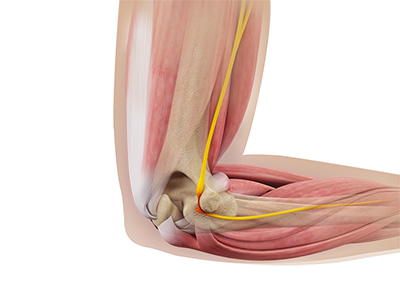
Elbow
The elbow is a complex joint formed by the articulation of three bones – the humerus, radius, and ulna. The elbow joint helps in bending or straightening of the arm to 180 degrees and lifting or moving objects.
The bones of the elbow are supported by:
- Ligaments and tendons
- Muscles
- Nerves
- Blood vessels
Bones and Joints of the Elbow
The elbow joint is formed at the junction of three bones:
- The humerus (upper arm bone) forms the upper portion of the joint. The lower end of the humerus divides into two bony protrusions known as the medial and lateral epicondyles, which can be felt on either side of the elbow joint.
- The ulna is the larger bone of the forearm located on the inner surface of the joint. It articulates with the humerus.
- The radius is the smaller bone of the forearm situated on the outer surface of the joint. The head of the radius is circular and hollow, which allows movement with the humerus. The articulation between the ulna and radius helps the forearm to rotate.
The elbow consists of three joints, namely:
- The humeroulnar joint is formed between the humerus and ulna and allows flexion and extension of the arm.
- The humeroradial joint is formed between the radius and humerus and allows movements like flexion, extension, supination, and pronation.
- The radioulnar joint is formed between the ulna and radius bones and allows rotation of the lower arm.
Articular cartilage lines the articulating regions of the humerus, radius, and ulna. It is a thin, tough, flexible and slippery surface that acts as a shock absorber and cushion to reduce friction between the bones. The cartilage is lubricated with synovial fluid, which further enables the smooth movement of the bones.
Muscles of the Elbow Joint
There are several muscles extending across the elbow joint that help in various movements. These include the following:
- Biceps brachii: Upper arm muscle, enabling flexion of the arm
- Triceps brachii: Muscle in the back of the upper arm that extends the arm and fixes the elbow during fine movements
- Brachialis: Upper arm muscle beneath the biceps, which flexes the elbow towards the body
- Brachioradialis: Forearm muscle that flexes, straightens and pulls the arm at the elbow
- Pronator teres: Muscle that extends from the humeral head, across the elbow, and towards the ulna, and helps to turn the palm facing backward
- Extensor carpi radialis brevis: Forearm muscle that helps in movement of the hand
- Extensor digitorum: Forearm muscle that helps in movement of the fingers
Ligaments and Tendons of the Elbow
The elbow joint is supported by ligaments and tendons, which provide stability to the joint.
Ligaments are a group of firm tissues that connect bones to other bones. The most important ligaments of the elbow joint are the:
- Medial or ulnar collateral ligament: Comprised of triangular bands of tissue on the inner side of the elbow joint
- Lateral or radial collateral ligament: A thin band of tissue on the outer side of the elbow joint
- Annular ligament: Group of fibers that surround the radial head, and hold the ulna and radius tightly in place during movement of the arm
Together, the medial and lateral ligaments are the main source of stability and hold the humerus and ulna tightly in place during movement of the arm.
The ligaments around a joint combine to form a joint capsule that contains synovial fluid.
Any injury to these ligaments can lead to instability of the elbow joint.
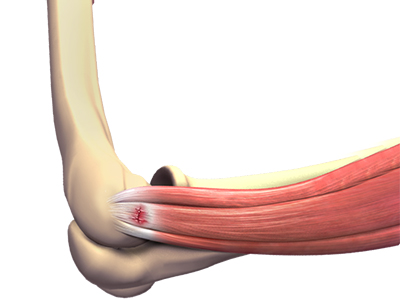
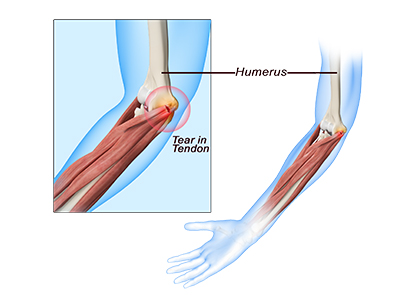
Tendons are bands of connective tissue fibers that connect muscle to bone. The various tendons that surround the elbow joint include:
- Biceps tendon: attaches the biceps muscle to the radius, allowing the elbow to bend
- Triceps tendon: attaches the triceps muscle to the ulna, allowing the elbow to straighten
Nerves of the Elbow
The main nerves of the elbow joint are the ulnar, radial and median nerves. These nerves transfer signals from the brain to the muscles that aid in elbow movements. They also carry sensory signals such as touch, pain, and temperature back to the brain.
Any injury or damage to these nerves causes pain, weakness or joint instability.
Blood Vessels Supplying the Elbow
Arteries are blood vessels that carry oxygen-pure blood from the heart to the hand. The main artery of the elbow is the brachial artery that travels across the inside of the elbow and divides into two small branches below the elbow to form the ulnar and the radial artery.
-
Elbow Ligament Reconstruction
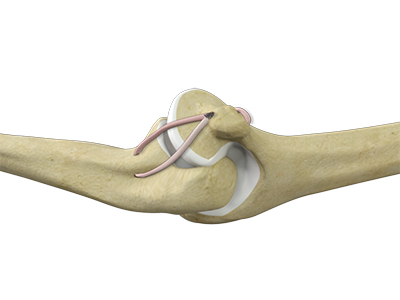
Ligament reconstruction is considered in patients with ligament rupture. Your surgeon will make an incision over the elbow. Care is taken to move muscles, tendons, and nerves out of the way.
-
Biceps Tendon Repair
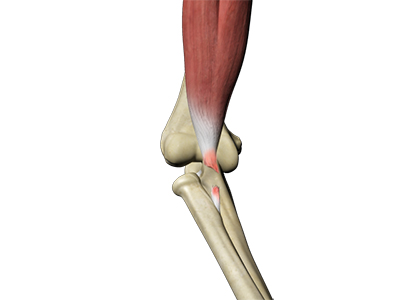
Biceps tendon repair is a surgical procedure to restore a biceps tendon that has been torn or ruptured by severe trauma or injury.
-
Elbow Surgery
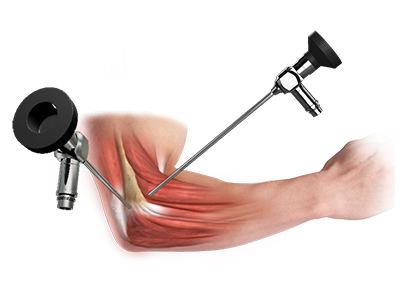
Elbow surgery is a surgical procedure for the treatment of an elbow injury or elbow condition. The procedure involves repairing a diseased, damaged, or degenerated elbow joint in order to eliminate pain and restore normal function.
-
Triceps Repair
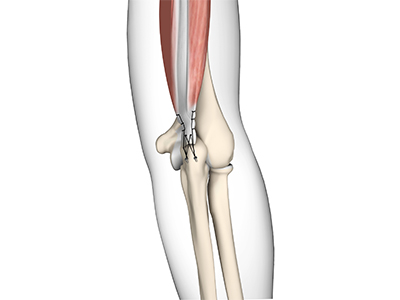
Triceps repair is a surgical procedure that involves the repair of a ruptured (torn) triceps tendon. A tendon is a tough band of fibrous tissue which connects muscle to bone and works together with muscles in moving your arms, fingers, legs, and toes.
-
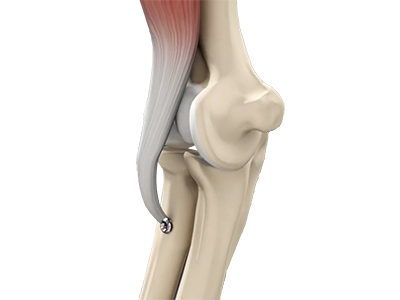
Cubital Tunnel Release (Medial Epicondylectomy)
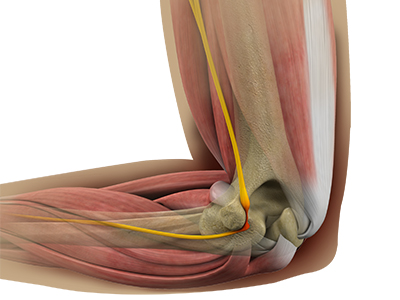
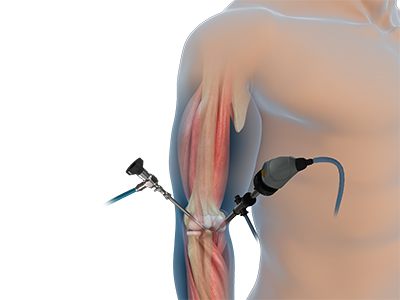
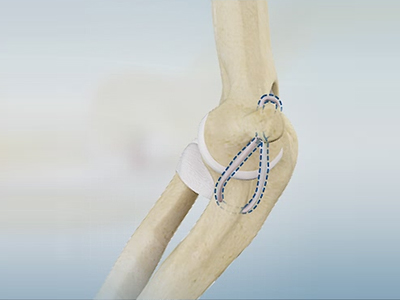
Cubital tunnel syndrome is a condition characterized by compression of the ulnar nerve in an area of the elbow called the cubital tunnel. The ulnar nerve travels down the back of the elbow behind the bony bump called the medial epicondyle, and through a passageway called the cubital tunnel.
-
Elbow Arthritis
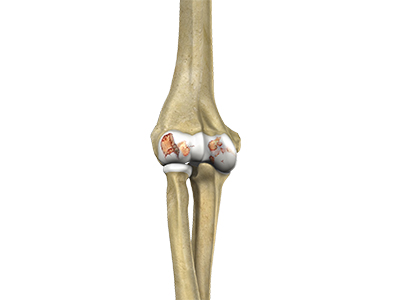
Although the elbows are not weight-bearing joints, they are considered to be most important for the functioning of the upper limbs. Hence, even minor trauma or disease affecting the elbow may cause pain and limit the movements of the upper limbs.
-
Elbow Dislocation
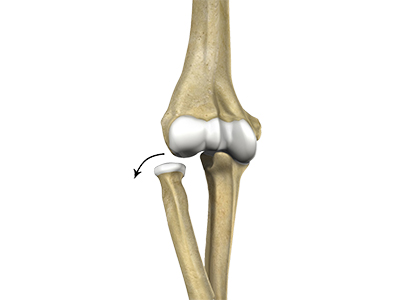
The arm in the human body is made up of three bones that join to form a hinge joint called the elbow. The upper arm bone or humerus connects from the shoulder to the elbow to form the top of the hinge joint.
-
Elbow Stiffness

Elbow stiffness is a condition characterized by a restricted range of motion of the elbow causing difficulty bending, straightening, or rotating your arm. Elbow stiffness may be caused due to injury, disease, or deformity.
-
Elbow Injuries
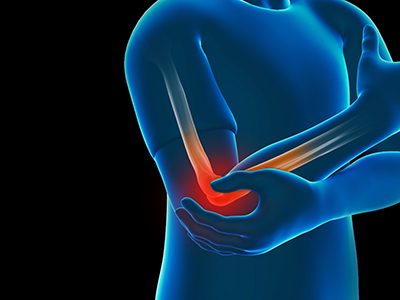
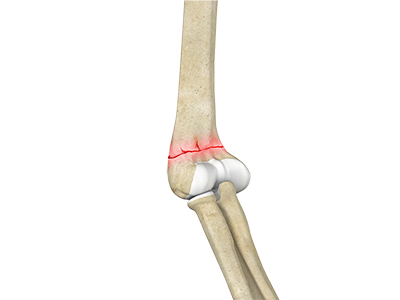
Fracture is a common injury to the elbow. Elbow fractures may result from a fall onto an outstretched wrist, direct impact to the elbow or twisting injury. Elbow fractures may cause severe pain, swelling, tenderness, and painful movements.
-
Elbow Ligament Injuries
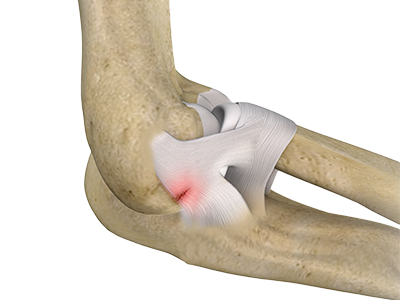
Elbow ligament injuries are injuries to the tough elastic tissues that connect the bones of the elbow joint to each other. These ligaments stabilize the elbow while allowing an appropriate joint range of motion to occur.
-
Elbow Instability
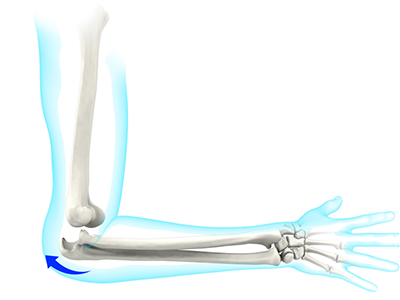
Elbow instability is a condition in which the elbow joint occasionally slides out of alignment due to the unstable state of the joint.
-
Throwing Injuries of the Elbow
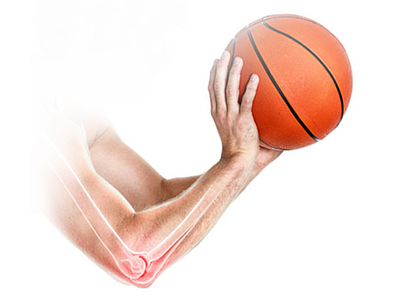
An athlete uses an overhand throw to achieve greater speed and distance. Repeated throwing in sports such as baseball and basketball can place a lot of stress on the joints of the arm, and lead to weakening and ultimately, injury to the structures in the elbow.
-
Bicep Tendon Tear at the Elbow
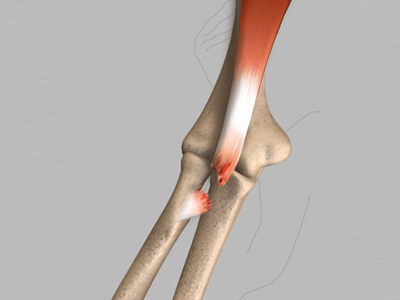
A biceps tear can be complete or partial. Partial biceps tendon tears will not completely break the tendon while complete tendon tears will break the tendon into two parts. Tears of the distal biceps tendon are usually complete and the muscle is separated from the bone.
-
Elbow Impingement
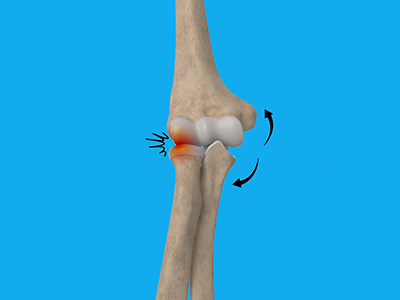
Elbow impingement is a medical condition characterized by compression and injury of soft tissue structures, such as cartilage, at the back of the elbow or within the elbow joint. It is a condition caused by repetitive forced extensions and overuse of the elbow.
-
Posterior Impingement of the Elbow
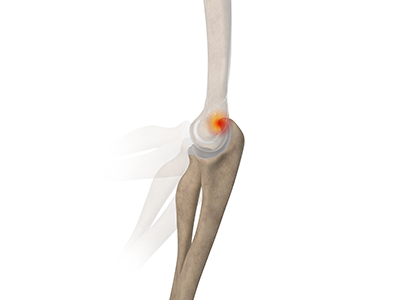
Posterior elbow impingement is a medical condition characterized by compression and injury of soft tissue structures such as cartilage at the posterior aspect (back) of the elbow joint. The impingement is caused by repetitive forced extensions and overuse of the elbow.
-
Triceps Injuries
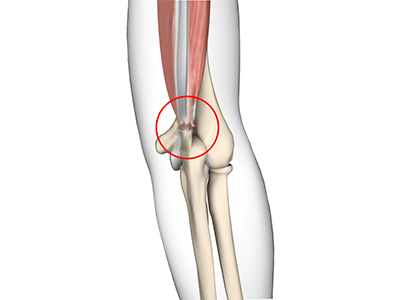
The triceps or triceps brachii is a crucial muscle of the upper arm (humerus). It runs along the upper arm bone between the shoulder and elbow. The triceps tendons connect the triceps muscles to the shoulder blade and elbow in your arm.
-
Ulnar Collateral Ligament (UCL) Injury
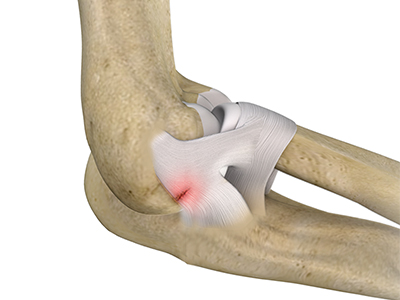
The ulnar collateral ligament (UCL), also called the medial collateral ligament, is located on the inside of the elbow and connects the ulna bone to the humerus bone. It is one of the main stabilizing ligaments in the elbow especially with overhead activities such as throwing and pitching.
-
Snapping Elbow
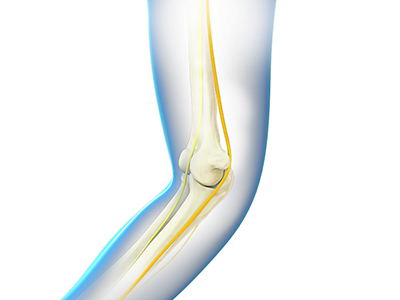
A snapping elbow (SE) is a rare condition, where the distal part of the triceps tendon will snap over the bony prominence on the inside of the elbow during elbow flexion and extension.
-
Elbow (Olecranon) Bursitis
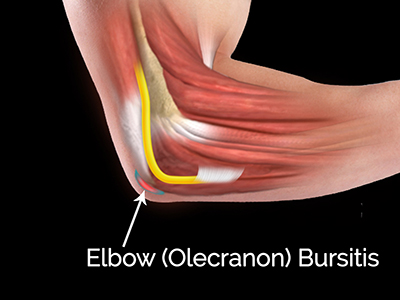
The elbow contains a large, curved, pointy bone at the back called the olecranon, which is covered by the olecranon bursa, a small fluid-filled sac that allows smooth movement between the bone and overlying skin.
-
Loose Bodies in the Elbow
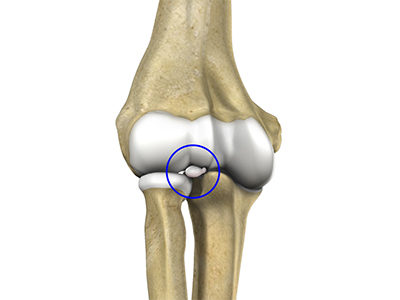
Your elbow is a joint made up of three bones held together by muscles, ligaments, tendons, and cartilage. It is both a hinge and pivot joint allowing you to bend and rotate your elbow freely.
-
Distal Biceps Injuries
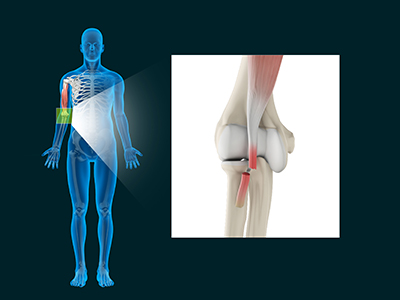
The biceps is a large muscle present in front of the upper arm, extending from the shoulder joint to the elbow. The lower end of the biceps muscle called the distal biceps forms a tendon which attaches to the upper part of the radius in the elbow.